Our rating: On the record. Confirmed by released government records or official investigations. Not a theory any more, though the theories around it may go further than the files do. How we rate.
01 What the theory says
The theory: the U.S. government exaggerated, or invented, a North Vietnamese attack on American destroyers in August 1964 to win congressional approval for a wider war in Vietnam.
02 Why people believe it
Because the government's own historians later concluded that the second reported attack, on August 4, didn't happen the way it was presented. A war that cost millions of lives began in part on intelligence that was wrong. For many people, that's the strongest evidence that wars can be sold on false premises.
03 What's on the record
Each point links to a primary source or official report.
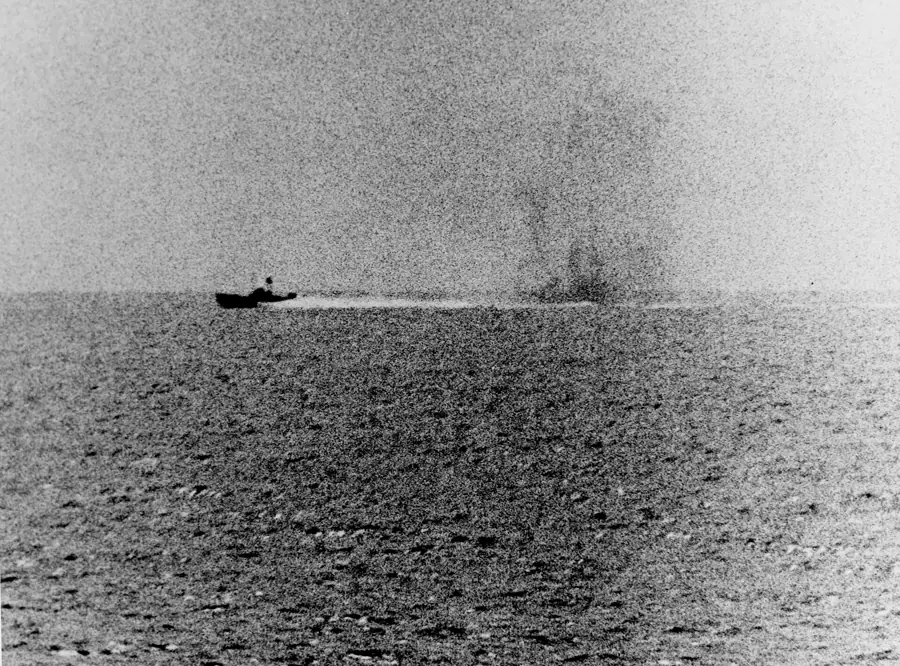
- On August 2, 1964, the destroyer USS Maddox exchanged fire with North Vietnamese torpedo boats in the Gulf of Tonkin. (Naval History and Heritage Command)
- A second attack was reported on the night of August 4. An internal NSA history by historian Robert Hanyok, declassified in 2005, concluded that no attack happened that night and that signals intelligence was presented in a way that supported the claim that it had. (NSA: “Skunks, Bogies, Silent Hounds, and the Flying Fish” (PDF))
- The Navy's own history office now states that more recent analysis "makes it clear that North Vietnamese naval forces did not attack Maddox and Turner Joy" on the night of August 4. It also notes that South Vietnamese boats, armed and trained by the U.S. Navy under a covert program called Operation 34A, had shelled targets on the North Vietnamese coast shortly before. (Naval History and Heritage Command)
- Congress passed the Gulf of Tonkin Resolution days later, authorizing the President to use armed force in Southeast Asia. (Public Law 88-408 (PDF))
04 What's unproven or disputed
- That officials knowingly invented the August 4 attack. The NSA study describes mistakes and misrepresented intelligence. Whether top officials knew at the time that the attack hadn't happened is still argued over by historians.
- That the August 2 clash was staged. It was a real exchange of fire, though the U.S.-backed Operation 34A raids on North Vietnam's coast at the same time are part of the context.
05 Open questions
- Who in Washington knew about the doubts the ship's commander reported that night, and when?
- Would Congress have voted the same way if it had seen the raw intercepts?
- What other Vietnam-era signals intelligence still hasn't been released?