Our rating: On the record. Confirmed by released government records or official investigations. Not a theory any more, though the theories around it may go further than the files do. How we rate.
01 What the theory says
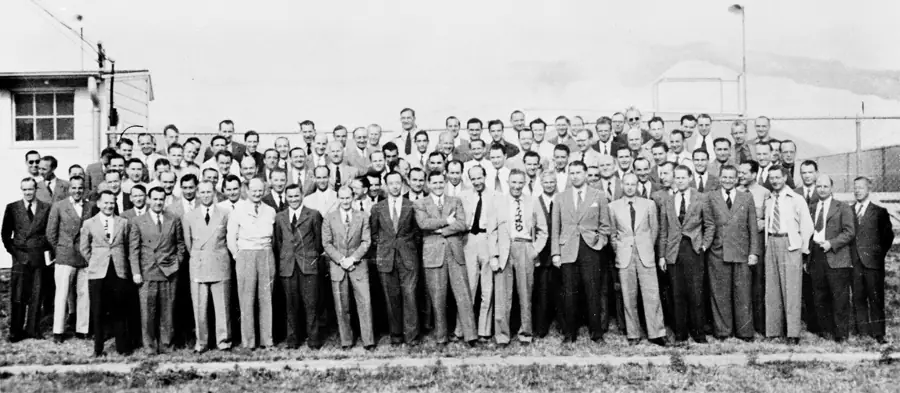
The theory: after World War II the U.S. government quietly imported Nazi scientists, whitewashed their pasts and put them to work on secret weapons, rockets and even mind-control research. Some versions claim Paperclip seeded later secret programs, from UFO projects to MKUltra.
02 Why people believe it
Because the core is plainly documented, and the program's leading figure, Wernher von Braun, went from building V-2 rockets for Nazi Germany to leading NASA's Saturn V program. When a government admits it gave a fresh start to people who served the Nazi regime, it's natural to wonder what else it was willing to overlook.
03 What's on the record
Each point links to a primary source or official report.
- More than 1,600 German scientists, engineers and technicians were brought to the United States between 1945 and 1959 under the program, run by the Joint Intelligence Objectives Agency (JIOA). Some had been members of the Nazi Party or the SS.
- Wernher von Braun, the V-2 rocket designer, came to the U.S. after the war, later led development of the Saturn V that launched the Apollo missions, and served as director of NASA's Marshall Space Flight Center. (NASA biography)
- Rocket engineer Arthur Rudolph, who had been operations director for V-2 production at the Mittelwerk factory, where concentration camp prisoners were used as forced labor, gave up his U.S. citizenship and left the country in 1984 under threat of prosecution after a Justice Department investigation.
- The Nazi War Crimes Disclosure Act of 1998 led to the declassification of millions of pages of U.S. records about Nazi war criminals and their postwar use by U.S. agencies, reviewed by an Interagency Working Group. (National Archives: IWG)
04 What's unproven or disputed
- That Paperclip scientists ran later secret programs such as MKUltra or UFO back-engineering. Some German scientists did work on U.S. military research, but specific claims of this kind lack documentary support.
- Exactly how much officials knew and hid. Historians still debate how deliberately records were cleaned up, and by whom.
05 Open questions
- How many recruits' wartime records were altered or withheld, and are those originals still out there?
- What did the program cost the U.S. in terms of justice for victims?
- Which Paperclip-era files remain classified?